

Quick answer
For most Indian SMBs in printing, signage, gifting, packaging, and small manufacturing, the most practical route to business expansion is adding customized, premium product lines produced in-house rather than chasing more volume in commoditized work. India’s digital printing market is growing at a 7.8% CAGR (IMARC Group), driven by e-commerce and demand for personalized products, while conventional commercial printing grows at only about 2.76% CAGR. A single UV flatbed printer can print directly on acrylic, wood, glass, metal, leather, MDF, and PVC, which opens several new revenue streams (personalized gifts, corporate gifting, branded merchandise, interior decor panels, industrial component marking) from one machine, one operator, and the floor space of a large table. The businesses that expand successfully are the ones that stop asking “how do I win more of the same orders” and start asking “which premium orders am I refusing today because my current setup cannot produce them”.
The growth ceiling most Indian SMBs hit
Micro, small, and medium enterprises are the engine of the Indian economy. Per the Ministry of MSME (July 2025, Press Information Bureau), the sector accounts for 30.1% of India’s GDP and 45.73% of exports. Yet most owners of small and medium-sized enterprises describe the same pattern: the first years of growth come easily from hustle and referrals, then revenue flattens. Not because demand disappeared, but because the business can only sell what its current production setup can make.
The numbers behind that ceiling are visible in market data:
- India’s commercial printing industry is projected to grow at roughly 2.76% CAGR through 2034 (IMARC Group). That is slower than inflation in many years. A business competing only in conventional print is fighting for share in a market that is barely expanding.
- India’s digital printing market, by contrast, is projected to grow from USD 1.4 billion in 2024 to USD 2.9 billion by 2033, a 7.8% CAGR (IMARC Group), with personalized products named as a primary driver.
- Globally, UV inkjet printing is projected to reach USD 92.82 billion by 2030, growing at 8.9% CAGR (The Business Research Company).
The gap between 2.76% and 8.9% is the gap between where most SMBs currently compete and where the growth actually is.
Why doing more of the same no longer works
If you run a signage shop, a gifting business, an acrylic fabrication unit, or a small factory, this shows up as specific, daily frustrations:
- You quote on premium customized jobs, then decline or outsource them because your setup cannot print on the material the client wants.
- Outsourced jobs eat margin twice: once in the vendor’s markup, and again in delays that cost you repeat business.
- Clients increasingly ask for short runs and single pieces with no minimum order quantity, which outsourcing partners refuse or price punitively.
- Because your product range looks like every competitor’s, you compete on price, and price competition compresses margins year after year.
In strategy terms, the way out is diversification: selling new products, often to new customer segments, using capability you add in-house. The question is which capability adds the most sellable products per rupee invested.
Where the new revenue actually is
Personalized and premium products
Consumers now pay for personalization. Deloitte’s consumer research found that one in five consumers who expressed interest in personalized products were willing to pay a 20% premium for them, and around half of consumers said customized products make ideal gifts (reported by Marketing Charts). For a business owner, that means the same acrylic sheet, wooden plaque, or metal bottle carries a meaningfully higher selling price the moment it carries a customer’s name, photo, or brand.
Corporate gifting
India’s gifting market was valued at USD 75.16 billion in 2024 and is expected to reach USD 92.32 billion by 2030 (TechSci Research). Corporate buyers inside that market order branded, personalized items in recurring cycles: joining kits, festival gifts, dealer awards, event mementos. These are exactly the short-run, high-margin, deadline-driven orders that in-house production wins and outsourcing loses.
Products most businesses cannot make today
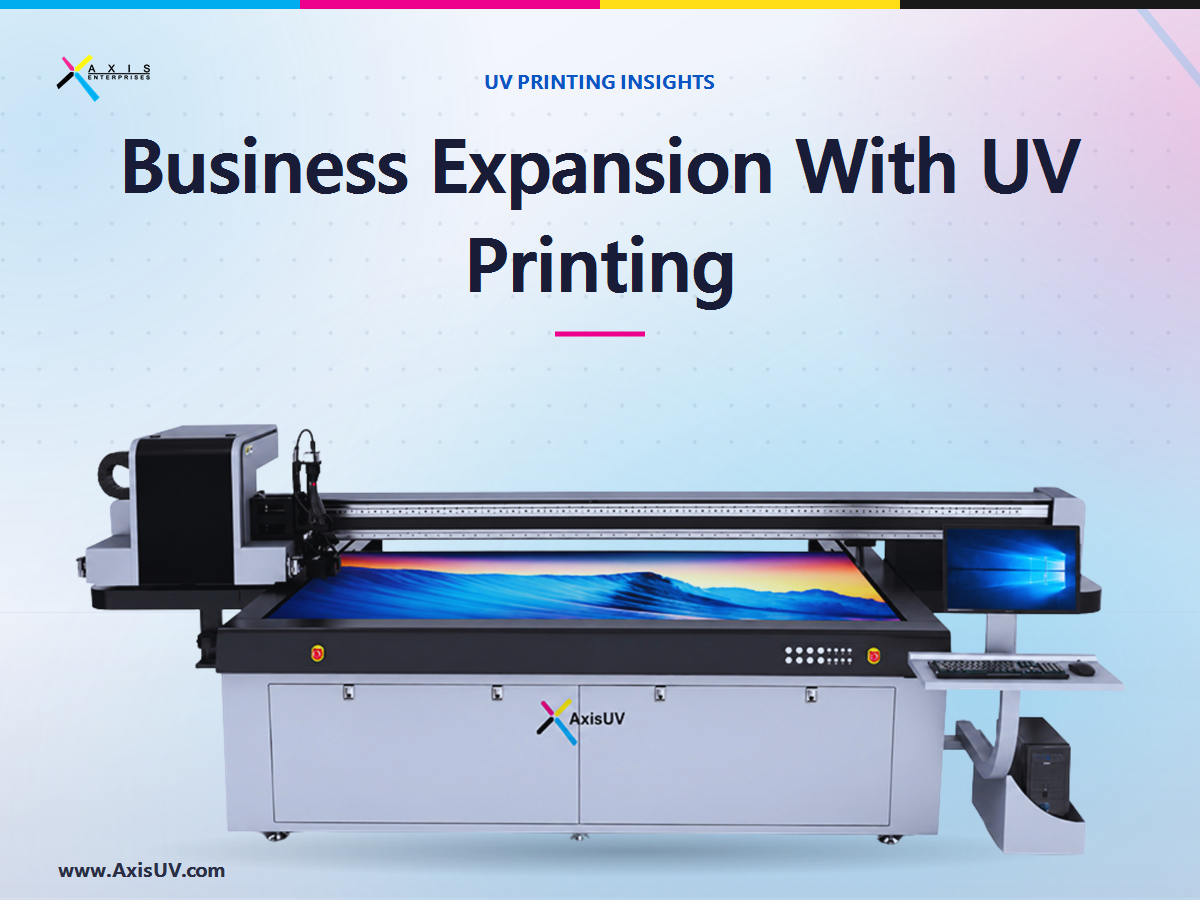
UV printing works by jetting ink through industrial inkjet printheads and hardening it instantly with ultraviolet light, a process called UV curing. Because the ink cures on the surface instead of soaking in, one flatbed machine prints directly on acrylic, wood, glass, metal, ceramic, leather, MDF, PVC, and most plastics, flat or with moderate surface variation. Practical new lines this unlocks for an Indian SMB include name plates and door signs, printed acrylic photo frames, wooden and MDF wall decor, personalized diaries and pen sets, printed mobile covers and electronics casings, branded industrial components and control panels, glass and ceramic decor, and premium packaging elements with raised texture effects.
Think of it the way a restaurant thinks about a tandoor: one new piece of equipment does not just make the existing menu faster, it makes an entirely new menu possible.
What expansion-ready production looks like
Before evaluating any machine, it helps to define what “ready to expand” means operationally:
- No minimum order quantity economics. You can profitably produce one piece, because setup time per job is minutes, not hours.
- Same-week delivery. Jobs that used to take 10 to 15 days through vendors ship in 1 to 3 days.
- Premium finishes in-house. White ink on dark and transparent materials, and varnish for raised, embossed-feel textures, so your samples look different from every price-war competitor.
- One operator capability. A trained graphics operator runs the machine; you do not need a new department.
- Capital efficiency under GST. For a registered business, GST paid on capital equipment is generally available as input tax credit under the Goods and Services Tax (India) framework, which reduces the effective cost of the investment. Confirm the treatment for your case with your GST practitioner.
To make it concrete: a gifting shop that sells a plain wooden plaque for ₹250 can typically sell a personalized, UV-printed version of the same plaque at ₹600 to ₹900, with the print itself costing a small fraction of that difference in ink and time. The margin lives in the customization, not the substrate. Run that arithmetic on your own products before you evaluate any machine; it tells you which new lines to launch first.
What smart buyers should look for in a UV printing machine
The machine is only half the decision. Evaluate the total package:
- Genuine industrial printheads with a clear spare-part price list shared before purchase, not after.
- White ink and varnish support, because premium finishes are where expansion margins come from.
- Bed size matched to your product mix, with vacuum hold-down for thin and warped materials.
- A live demo on your own materials. Take your acrylic, your wood, your metal. Judge the output, not the brochure.
- Local service response commitment in writing, including engineer availability and typical turnaround, since downtime is the single biggest hidden cost.
- Operator training included, so the machine earns from week one instead of month three.
A practical way forward
This is the buying framework we built Axis Enterprises around. At uvprinterindia.com we supply UV flatbed printing machines to Indian businesses with exactly this expansion path in mind: machines specified for the products you plan to sell, demos on your own materials, operator training, and long-term service support. If you are comparing options, start by exploring the UV flatbed printer range against the checklist above rather than against price alone.
Next step
If your growth has flattened and you suspect the constraint is what your current setup can produce, get a second opinion on the numbers before you commit to anything. Book a free UV Printing Machine Buying Consultation at uvprinterindia.com. Bring your current product list and your most frequently refused orders, and the Axis Enterprises team will help you map which new revenue streams fit your market, what machine specification they require, and what the investment math looks like for your business.
Frequently asked questions
Which personalized products have the highest demand?
In the Indian market, consistently strong sellers include personalized corporate gifts (diaries, pen sets, bottles, joining kits), acrylic and wooden photo frames and plaques, name plates and door signs, mobile covers, and wall decor panels. Demand concentrates around corporate cycles (festivals, onboarding, awards) and personal occasions (weddings, birthdays, anniversaries), so a business serving both keeps the machine busy year-round.
Is corporate gifting still a profitable business in India?
Yes. India’s overall gifting market was valued at USD 75.16 billion in 2024 and is projected to reach USD 92.32 billion by 2030 (TechSci Research). Corporate gifting is the most systematic slice of it: orders repeat annually, buyers value speed and branding over lowest price, and personalization commands a premium, with Deloitte research finding one in five interested consumers willing to pay 20% more for personalized products.
Can one UV printer really print on acrylic, wood, glass and metal?
Yes. Because UV-curable ink hardens on the surface under ultraviolet light instead of being absorbed, the same flatbed machine prints on acrylic, wood, glass, metal, ceramic, leather, MDF, PVC, and most rigid plastics. Adhesion on difficult surfaces like glass and metal typically uses a primer coat, and white ink underprinting keeps colors vivid on dark or transparent materials.
Which industries use flatbed UV printers the most?
Signage and display makers, corporate gifting and promotional product companies, packaging and label businesses, furniture and interior decor brands, acrylic fabricators, electronics and industrial component manufacturers, and e-commerce sellers of customized products are the heaviest users. Most bought the machine either to stop outsourcing or to add premium product lines they could not previously offer.
Can I print single customized pieces profitably?
Yes, and this is the core economic advantage. There are no plates, screens, or long setup runs; the file goes from design to print in minutes. That means a single personalized piece can carry healthy margin, which is exactly the kind of no-minimum-order work that outsourcing partners refuse and that customers increasingly expect.
Sources
- IMARC Group: India Digital Printing Market
- IMARC Group: India Commercial Printing Market
- The Business Research Company: UV Inkjet Printing Global Market Report
- TechSci Research: India Gifting Market
- Marketing Charts: Would Consumers Pay More for Personalized Products? (Deloitte data)
- Press Information Bureau: MSME sector accounts for 30.1% of India’s GDP and 45.73% of exports