

Published: July 24, 2026. Last updated: July 24, 2026.
Quick answer: Is retail display printing worth chasing with a UV printer?
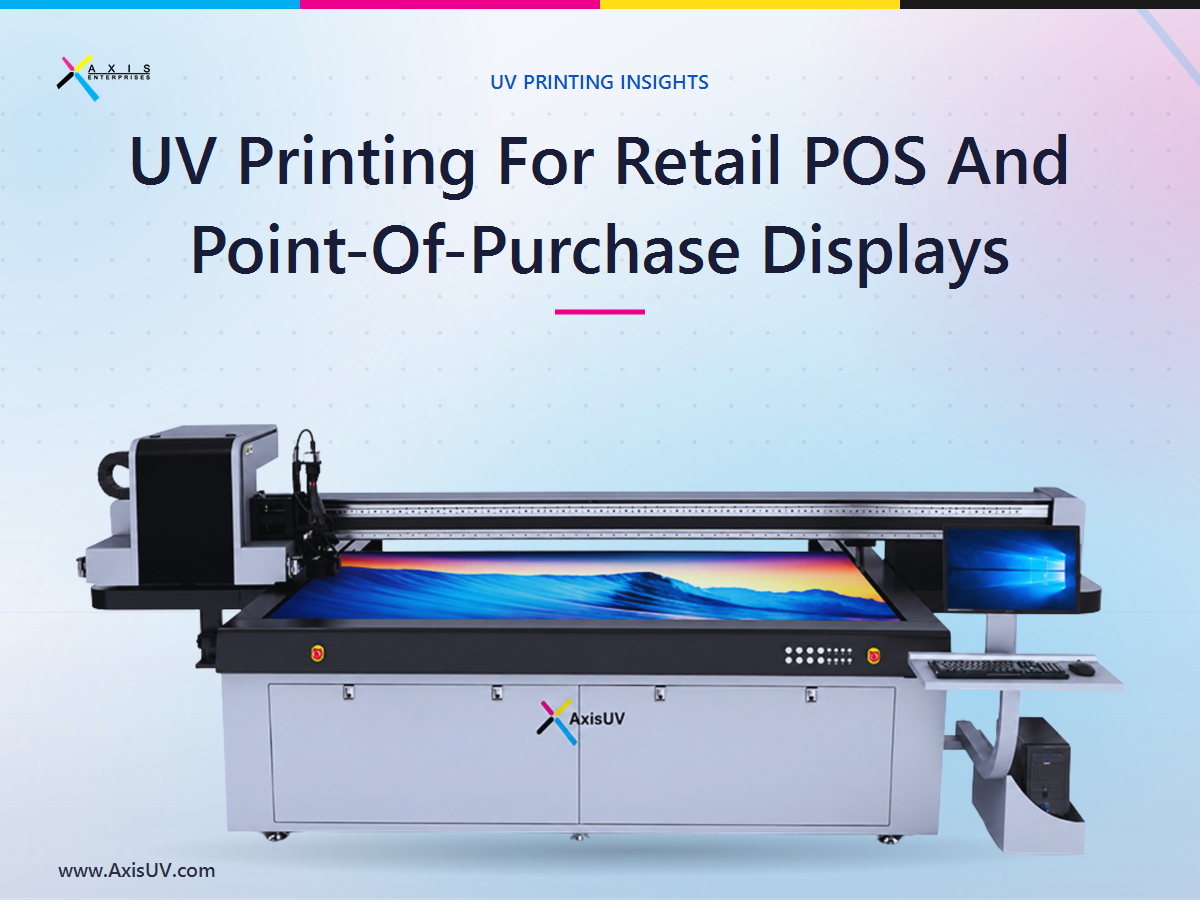
Yes. Retail point-of-purchase (POP) and point-of-sale (POS) display printing is one of the highest-margin, most repeatable jobs a print business can take on, and a flatbed UV printer is built for it. Retailers keep buying counter displays, standees, shelf strips, danglers, and branded signage because most buying decisions still happen inside the store, not before. A UV printer lets you print directly on rigid materials like acrylic, foam board, PVC, wood, and metal in a single pass, with waterproof, scratch-resistant ink and no plates or screens. That means short runs, fast turnaround, and premium pricing on jobs that outsourced screen printers cannot match on speed or flexibility. For a small Indian print shop, retail displays convert idle machine hours into recurring orders from a market that is still growing.
Why the store shelf is quietly becoming the most valuable advertising space
Most brands obsess over online ads. The data says the real decision happens somewhere else. According to research popularized by POPAI’s Shopper Engagement studies reported by Supermarket News, about 76% of grocery purchase decisions and roughly 82% of mass-merchant purchase decisions are made inside the store. The shelf, not the search bar, is where the sale is won.
That single fact reshapes where marketing money flows. When a brand knows the final choice is made in the aisle, it invests in the aisle: displays, standees, wobblers, and branded fixtures that catch the eye at the exact moment of decision.
The market reflects this. The global point-of-purchase display market was valued at roughly USD 26.66 billion in 2025 and is projected to reach about USD 52.01 billion by 2032, a compound annual growth rate near 9.9%, per 360iResearch. A separate estimate from Strategic Market Research puts the segment at around USD 20.5 billion by 2030. The numbers differ by method, but the direction is the same: up.
Why this matters for Indian print shops and small manufacturers
India is where this demand is compounding fastest. The country’s retail market is projected to grow from about USD 1.06 trillion in 2024 to USD 1.93 trillion by 2030, according to the Deloitte-FICCI report summarized by IBEF. Even as online retail grows, in-store retail is expected to remain roughly 86% of the total by 2030. More physical stores means more shelves, more brand launches, and more display work to be printed.
At the same time, printing itself is going digital. India’s digital printing market reached about USD 1.4 billion in 2024 and is forecast to hit USD 2.9 billion by 2033 at a 7.8% CAGR, per the IMARC Group, driven by demand for personalization and short runs.
Here is the buyer-specific pain. Most small print shops still send rigid display jobs to a screen printer or a large-format outsourcer. That path is slow, needs high minimum quantities, and quietly hands away margin. When a local shop, salon, pharmacy, or FMCG distributor needs 30 branded counter displays by Friday, the shop that can print them in-house wins the order and the relationship. The shop that outsources loses both.
What retail display buyers actually reward
Brands and retailers buying display work are not shopping on price alone. They are buying certainty. In practice they reward four things:
- Speed. Store resets, festival campaigns, and product launches run on tight calendars. A display that arrives late is worthless.
- Short-run flexibility. Retailers rarely want 5,000 identical pieces. They want 50 for a pilot, then a reorder. Screen printing punishes short runs; digital rewards them.
- Material range. One campaign may need acrylic counter units, foam-board standees, and metal shelf plates. A buyer prefers one vendor who can do all of it.
- Durability. Displays get handled, wiped, and moved. Ink that scratches or fades makes the brand look cheap.
What smart buyers should look for in the printing method
If you are evaluating how to produce retail displays profitably, the printing technology decides your economics. The relevant advantages of UV printing come from UV curing, where ink is cured instantly by ultraviolet light instead of drying by evaporation, and from inkjet printing, which places ink digitally with no plates or screens.
That combination gives a UV flatbed printer three properties that matter for display work:
- Direct-to-substrate, single pass. Print straight onto rigid acrylic, foam board, PVC, wood, aluminium, and glass. No transfers, no lamination step for most jobs.
- Instant cure and immediate handling. Because the ink cures on contact, prints can be finished, cut, and packed right away, which is what makes same-day turnaround possible.
- White ink and texture. Printing white under or over color unlocks clear acrylic, dark materials, and premium finishes that plain point-of-sale fixtures cannot match.
When you compare the two common routes to producing rigid retail displays, the difference in a small shop’s economics is stark.
Run the numbers before you buy: total cost of ownership
Do not judge a machine on sticker price. Judge it on total cost of ownership: ink consumption per square foot, print head life, maintenance, uptime, and after-sales support over three to five years. A cheaper printer that sits idle waiting for parts costs far more than its price tag.
Factor in tax treatment too. In India, a UV printer is a capital purchase, and the Goods and Services Tax (India) paid on eligible business equipment can generally be claimed as input tax credit, which lowers the real acquisition cost for a registered business. Build that into your payback estimate rather than reading the invoice at face value.
A better way forward
If retail display work looks like a fit for your shop, the deciding factor is the machine and the partner behind it: reliable print heads, dependable white ink handling, and service that keeps the printer running during a campaign crunch. That is the gap Axis Enterprises exists to close. Through uvprinterindia.com, we help Indian print shops, sign makers, and small manufacturers choose a UV printer matched to the display work they actually want to win, not an oversized machine they will underuse.
If you are weighing your first UV flatbed, you can book a free UV printing machine buying consultation and get an honest read on machine size, material range, and running cost for your market. You can also compare UV printer options for retail and display printing or speak with a UV printing specialist about where the fastest payback sits for your shop.
Frequently asked questions
Can a UV printer print directly on rigid POP display materials like acrylic and foam board?
Yes. A flatbed UV printer prints directly onto rigid substrates including acrylic, foam board, PVC, wood, aluminium, and glass in a single pass. The ink is cured instantly by UV light, so displays can be handled and finished immediately without a separate drying stage.
What retail display products can a small print shop sell with a UV printer?
Common sellers include counter and checkout displays, floor standees, shelf strips and talkers, wobblers and danglers, menu and tariff boards, branded acrylic holders, and in-store signage. Because short runs are viable, you can serve local retailers, pharmacies, salons, cafes, and FMCG distributors who order in small, repeating batches.
Is UV printing for retail displays profitable in India?
It can be, because demand is growing and in-house production keeps margin that would otherwise go to an outsourcer. India’s retail market is projected to reach USD 1.93 trillion by 2030 with in-store retail near 86%, per the Deloitte-FICCI report. Profitability depends on machine utilisation, running cost per print, and pricing for speed rather than competing only on rate.
Do I need white ink for retail display printing?
For most premium display work, yes. White ink lets you print vivid color on clear acrylic and dark or coloured substrates, and it enables layered effects that make a display look high-end. If your target work is mostly clear and dark materials, prioritise a printer with reliable white ink circulation.
How fast can a UV flatbed produce a retail counter display?
Because the ink cures on contact, many counter-sized pieces can be printed, cut, and packed the same day. Actual throughput depends on the printer’s speed setting, print size, and finishing, but the elimination of drying and plate-making is what makes same-day and next-day retail turnaround realistic.
Sources
- Supermarket News: POPAI, 76% of Decisions Made In-Store
- 360iResearch: Point-of-Purchase Display Market Size and Share
- Strategic Market Research: Point-of-Purchase Display Market Report
- IMARC Group: India Digital Printing Market
- Deloitte: India Retail Sector to Reach USD 1.93 Trillion by 2030
- IBEF: India Retail Sector Projected to Nearly Double by 2030