

Published: July 23, 2026. Last updated: July 23, 2026.
Quick answer: what is embossed and 3D texture UV printing, and is it worth it?
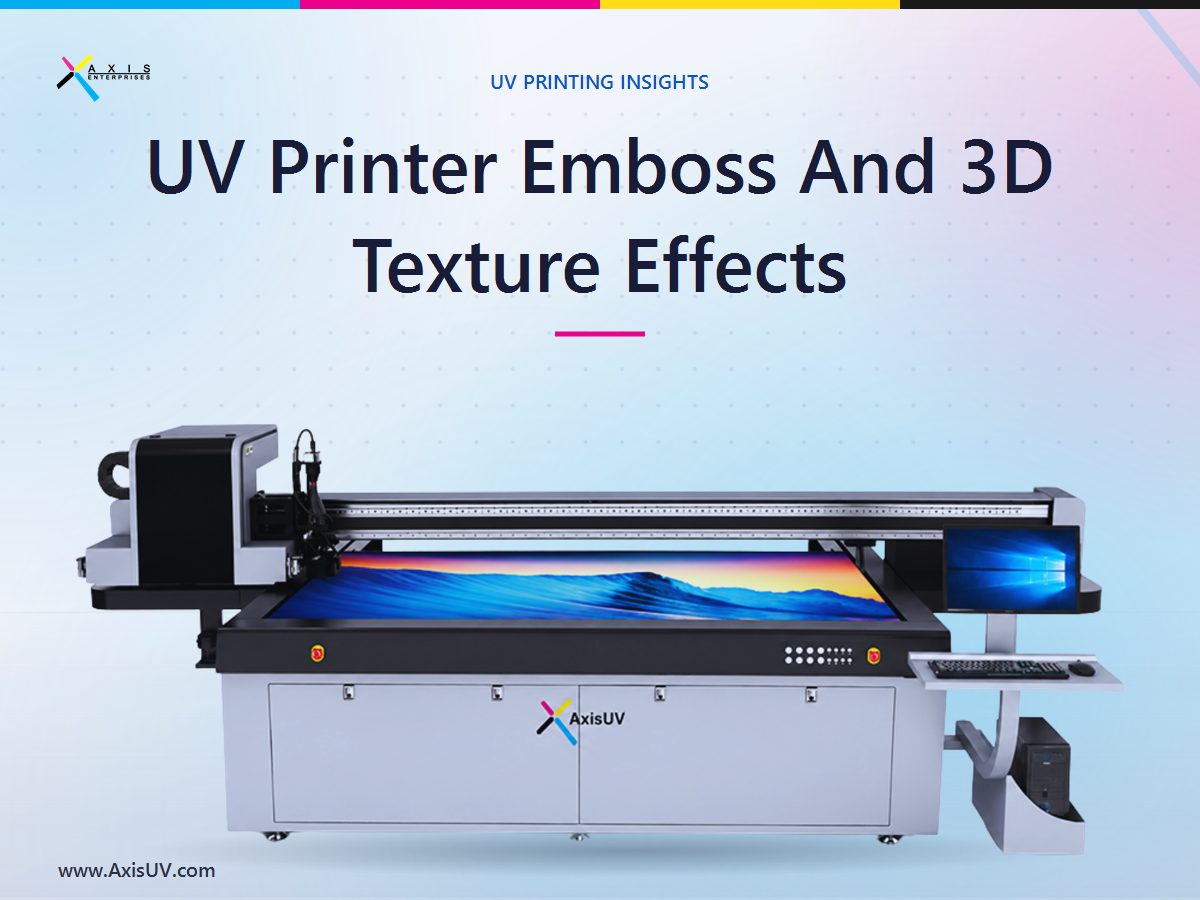
Embossed and 3D texture UV printing is a flatbed printing method that builds up clear varnish and white ink in layers to create raised, tactile effects you can feel with your fingers: raised lettering, spot-gloss highlights, textured panels, faux-leather grain, braille, and simulated emboss. It uses UV curing, where ultraviolet light instantly hardens each ink layer, so height can be stacked without smudging. It is worth it for one clear reason: flat prints compete on price, but raised, tactile prints compete on perceived value. Print-industry publication WhatTheyThink reports that tactile finishes raised viewer pause rates by roughly 10 to 20 percent in pilot displays, and that embellishment moves print from commodity to premium. For a signage shop, gifting maker, or packaging business, that difference is the gap between low-margin volume work and high-margin specialty orders.
Why is flat printing a shrinking-margin trap?
Flat printing is becoming a commodity, and commodities compete on price alone. India’s digital printing market is growing quickly, which sounds good until you realize that growth pulls in more competitors chasing the same flat jobs. According to 6Wresearch, the India digital printing market is projected to expand at a CAGR of about 19 percent through 2031, and IMARC Group estimates the market will reach roughly USD 2.9 billion by 2033.
More capacity means more shops offering identical flat output. When every vendor can print the same flat sticker, banner, or card, the only lever left is a lower quote. That is how margins leak: not through one bad month, but through a slow race to the bottom on undifferentiated work.
The escape route is not printing more flat jobs faster. It is offering something competitors down the road cannot: finishes buyers can see and feel.
What does this mean for small print shops, signage makers, and gifting businesses?
For Indian small and medium businesses, the squeeze is specific and personal. The micro, small and medium enterprise sector is enormous and crowded: the Government of India’s Press Information Bureau reports the MSME sector contributes about 31 percent of India’s GDP and 35.4 percent of manufacturing output, with roughly 39 crore people employed. When your category is that large, standing out on flat work is nearly impossible.
Three buyer types feel this most:
- Signage and display makers quoting against a dozen shops for the same flat acrylic or foam board sign.
- Promotional-product and gifting businesses whose flat-printed mugs, diaries, and boxes look like everyone else’s.
- Packaging and label providers under pressure to deliver premium shelf appeal on tight budgets.
The good news is that demand for the premium end already exists. The global personalized gifts market was valued at roughly USD 31.4 billion in 2025 by Market Research Future, and Technavio projects the category will grow by another USD 10.76 billion between 2025 and 2029. Buyers want distinctive, high-value products. The question is whether your shop can produce them.
Why do tactile and embossed finishes command higher prices?
Tactile finishes command higher prices because touch changes how buyers judge value. Print-industry analysis from WhatTheyThink notes that a surface which feels interesting in the hand gets more attention, is remembered longer, and signals that a brand invested in the details. That perceived investment is what justifies a higher price.
The willingness to pay is measurable. As summarized in a widely cited customization statistics roundup, roughly one in five consumers say they would pay up to a 20 percent premium for customized goods, and 48 percent will wait longer to get them. Raised, textured, personalized output is exactly the kind of product that premium supports.
Packaging shows the same pattern. Verified Market Research projects the UV cure printing inks for packaging market to grow at a CAGR of about 10.3 percent, driven by brands wanting finishes that make products feel premium on the shelf. Embellishment is not a novelty. It is where the margin is moving.
How does 3D texture UV printing actually work?
It works by layering. A UV flatbed printer lays down inkjet droplets of ink and clear varnish, and a UV lamp cures each pass instantly. Because the ink hardens on contact instead of soaking in, the printer can stack multiple passes of varnish to build measurable height, then print color and gloss on top.
This unlocks effects flat printing cannot reach:
- Raised spot gloss on logos, lettering, or borders, similar in look to traditional embossing but printed digitally without a die.
- Textured surfaces such as faux leather grain, canvas, wood, or stone feel.
- Braille and tactile markers for accessible signage and packaging.
- Layered dimensional artwork where different areas sit at different heights.
All of this prints directly onto acrylic, wood, glass, metal, leather, MDF, PVC, and more, on the same machine, without outsourcing a separate finishing step.
What should a smart buyer look for in a machine that does this well?
Not every UV printer produces clean, sellable texture. Before you buy, judge machines against criteria that actually decide whether premium work is profitable:
- A dedicated white ink and varnish channel: without it, you cannot build height or print bright color on dark and clear materials.
- Reliable multi-layer varnish build: the machine must stack passes accurately so raised areas stay crisp, not blurred.
- Resolution fine enough for small text and logos: premium buyers notice ragged edges.
- Throughput that fits your order mix: texture jobs take more passes, so speed protects your delivery times.
- Honest total cost of ownership: weigh ink, varnish, maintenance, and uptime, not just the sticker price. Use a total cost of ownership view before comparing quotes.
- Local service, training, and spare parts: a premium line only earns if the machine keeps running.
Also plan for tax. Capital equipment carries Goods and Services Tax, and registered businesses can typically claim input tax credit, so factor the GST-inclusive price and your credit position into the real cost.
A better way forward
Given all of the above, the smartest move for a print business feeling the flat-work squeeze is to add a capability competitors do not have, on equipment matched to your materials and order mix. That is the practical thinking behind the UV flatbed machines at Axis Enterprises, built for Indian businesses that want to sell raised, textured, and personalized output instead of racing on price.
If you are weighing your first machine or an upgrade, it helps to start from your work, not a spec sheet. You can book a free UV printing machine buying consultation to map which finishes your customers will pay for, and compare UV flatbed printer options against the criteria above. For owners moving from outsourced finishing to in-house production, the team can also help you plan running costs and payback before you commit.
Frequently asked questions
Can a UV printer really create raised, embossed effects without a die?
Yes. A UV flatbed printer builds height by curing multiple layers of clear varnish on top of each other, so it produces raised, embossed-style effects digitally, with no metal die or separate embossing press. This makes short runs and one-off personalized pieces economical, which traditional die embossing cannot match.
What products sell best with 3D texture and tactile UV printing?
The strongest sellers are items where feel signals value: premium business cards, corporate gifts, personalized bottles and drinkware, decorative furniture and interior panels, luxury packaging, name plates, and accessible signage. These are the categories where buyers accept a premium for a distinctive, tactile finish.
Is there enough demand in India to justify a textured-print machine?
Demand is growing on both the market and consumer sides. India’s digital printing market is projected to grow at roughly 19 percent CAGR through 2031 per 6Wresearch, and consumer research shows about one in five buyers will pay up to a 20 percent premium for customized goods. A machine that produces premium finishes positions you for the higher-margin slice of that growth.
Will textured printing slow down my production too much?
Texture jobs use more passes than flat prints, so they take longer per piece, but they also sell at higher prices, so revenue per hour usually rises, not falls. The key is choosing a machine with throughput suited to your order mix so premium jobs do not choke your everyday work.
Do I need special skills to run tactile and embossed jobs?
You need basic design-file setup and short operator training, not specialist expertise. Most of the texture and varnish build is controlled in software, so a trained operator can produce consistent raised effects after guided onboarding from your supplier.
Sources
- 6Wresearch, India Digital Printing Market
- IMARC Group, India Digital Printing Market
- Press Information Bureau, Government of India, MSME sector contribution
- Market Research Future, Personalized Gifts Market
- Technavio via PR Newswire, Personalized Gifts Market growth 2025 to 2029
- WhatTheyThink, Crafting a Winning Business Plan for Print Embellishments
- Verified Market Research, UV Cure Printing Inks for Packaging Market