

Quick answer
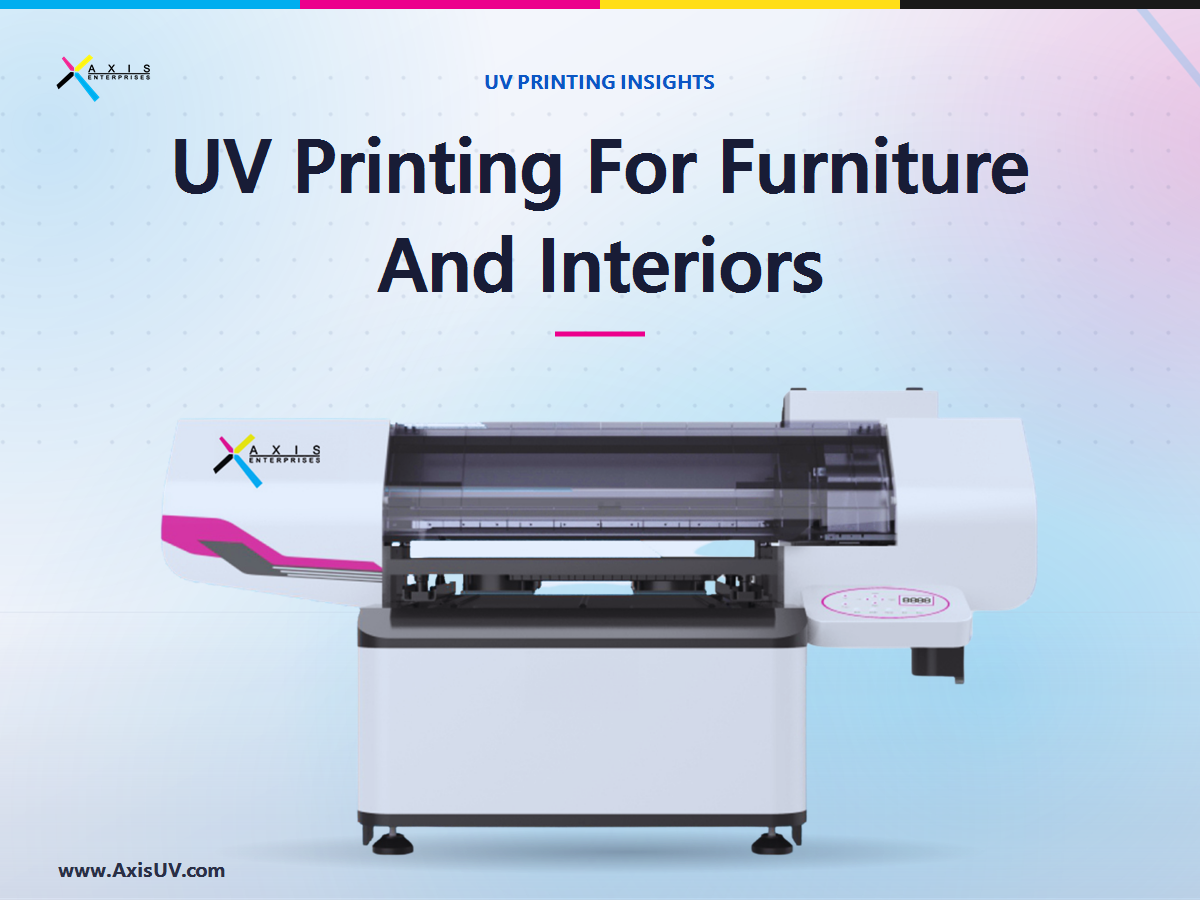
A UV printing machine lets a furniture maker, interior fabricator, or print shop print full-colour designs, textures, and finishes directly onto rigid surfaces such as wood, MDF, laminate, acrylic, glass, and metal, with no stickers, no laminating, and no outsourcing. The ink is cured instantly by ultraviolet light, so the printed panel is ready to handle within seconds and resists scratching, moisture, and fading. For Indian small and medium businesses, this turns a plain panel worth a few hundred rupees into a customised decor piece that commands a premium, and it opens the door to interior projects (feature walls, wardrobe shutters, headboards, partitions, signage, and bespoke furniture) that were previously handed to outside vendors. The furniture and home decor markets in India are both worth well over ₹2 lakh crore each and growing steadily, yet most smaller workshops still cannot accept a customisation brief. An in-house UV printer closes that gap. This article explains the market shift, the real economics, and exactly what to check before you buy.
The demand for customised interiors is growing faster than most workshops can serve it
Two large markets are pulling in the same direction. According to Mordor Intelligence, the India furniture market is valued at roughly USD 29.27 billion in 2025 and is projected to grow at about 7.63 percent a year. Alongside it, the India home decor market, tracked by IMARC Group, sits near USD 26.88 billion and is forecast to reach around USD 42.36 billion by 2034. IMARC also reports the sector is being driven by rising disposable incomes, rapid urbanisation, and demand spreading into tier II and tier III cities, a point echoed by India Brand Equity Foundation (IBEF).
The buyer behind this growth wants something specific. McKinsey reports that about 71 percent of consumers now expect personalisation, and feel frustrated when they do not get it (McKinsey, The value of getting personalization right). Deloitte Digital found that roughly one in five consumers are willing to pay a premium of up to 20 percent for a product they can personalise (Deloitte Digital). A homeowner or an interior designer will pay more for a wardrobe shutter with a custom motif or a feature panel that matches a mood board. The demand is there and it carries margin.
What this means for furniture makers, fabricators, and print shops
Here is the gap. The market wants customised interiors, but a large share of the businesses that could supply them cannot say yes to a customisation order. This matters because micro, small, and medium enterprises are the backbone of Indian manufacturing. The Ministry of MSME reports the sector accounts for about 30.1 percent of India’s GDP and 35.4 percent of manufacturing output, and employs close to 38.9 crore people (Press Information Bureau, Government of India). Yet most of these workshops still solve customisation the slow way.
If you run one of these businesses, the pain is familiar:
- You outsource the printed part. A designer asks for a printed panel, and you send it to a vendor, wait days, pay their margin, and lose control of quality and timelines.
- You rely on stickers and vinyl wraps. They look acceptable on day one, then peel, bubble, or fade, and the complaint comes back to you.
- You turn work away. A high-value interior project needs printed shutters, a glass partition, and a headboard, and because you cannot produce them in-house, the whole contract goes to someone who can.
- You compete only on price. Without a differentiated finish, a plain laminate panel is a commodity, and you are stuck matching the cheapest quote in the market.
Every one of these is a margin leak. The furniture and decor demand is expanding, but a workshop that cannot print is watching the premium slice of it walk out the door.
How UV printing actually solves this
UV printing is a form of inkjet printing where the ink is dried, or set, the instant it lands using UV curing, a process in which ultraviolet light hardens the ink through a photochemical reaction. Because the ink cures on contact instead of soaking in or air-drying, three things become possible that ordinary printing cannot offer.
It prints directly on almost any rigid surface. Wood, MDF, laminate, acrylic, glass, metal, ceramic tile, and PVC all accept UV ink. For interior design work, that means one machine can decorate wardrobe shutters, wall panels, tabletops, partition glass, and signage, without switching to a different process for each material.
The finish is durable. A cured UV print resists scratching, moisture, and fading far better than a sticker or a wrap, so it survives daily use in a home or office. Fewer callbacks, fewer replacements, and a product you can warranty with confidence.
It supports texture and premium effects. By layering white ink and clear varnish, UV printing can build raised, tactile, and gloss or matte finishes on the same panel. This is exactly the kind of detail that justifies a higher price to a design-led buyer.
In short, UV printing converts a plain substrate into a finished decor product in one pass, in-house, on your schedule.
What smart buyers should look for in a UV printing machine
Buying a printer is a production decision, not just a hardware purchase. Judge any machine on the full picture, not the sticker price. A useful frame is total cost of ownership, which counts ink, printheads, maintenance, power, and downtime across the machine’s life, not only the day-one cost. Use these criteria:
- Material and thickness range. Confirm the flatbed can hold the substrates and object heights you actually work with, from thin acrylic to thick furniture panels.
- White ink and varnish capability. These unlock premium, textured, and light-coloured-on-dark finishes. Without them you are limited to basic colour work.
- Printhead quality and support. Ask which printheads are used, what they cost to replace, and whether spare parts and service are available locally so a fault does not idle you for weeks.
- Honest running cost per print. Ask for the real ink cost on a typical panel, so you can price jobs and protect margin.
- Training and onboarding. A machine only earns when your team can run it. Confirm hands-on training on colour profiles and daily maintenance.
- GST-aware costing. UV printers and inks attract Goods and Services Tax (India), and registered buyers can typically claim input tax credit. Factor this into your real acquisition cost rather than reading the invoice at face value.
A better way forward
If the demand for customised furniture and interiors is real, and the numbers above say it is, then the question is not whether to add printing capability but how to add it without buying the wrong machine. That is the part worth getting right, and it is where independent guidance helps.
At Axis Enterprises, we help Indian furniture makers, fabricators, and print shops choose a UV printing machine that fits their materials, their order sizes, and their budget. You can explore the range of UV printing machines built for exactly this kind of decor and interior work, and see which configuration matches the panels and finishes you sell. If you are weighing options, our team can walk you through print samples on your own materials and give you an honest running-cost breakdown so you can compare total cost of ownership before you commit. For businesses that want a considered decision rather than a rushed one, you can book a free UV printing machine buying consultation and get answers specific to your workshop.
Frequently asked questions
Can a UV printer print directly on wood and laminate furniture panels?
Yes. A UV flatbed printer prints full-colour designs directly onto wood, MDF, laminate, acrylic, glass, and metal, and the ink is cured instantly by UV light. There is no need for stickers, transfers, or a separate laminating step, which is why it suits wardrobe shutters, wall panels, and tabletops.
Is a UV print durable enough for daily use in a home or office?
A properly cured UV print resists scratching, moisture, and fading better than vinyl wraps or stickers, so it holds up under everyday handling on furniture and interior surfaces. Durability depends on correct material preparation, ink profile, and the right primer for each substrate.
What materials can one UV printing machine handle?
A single UV flatbed can print on a wide range of rigid materials including wood, MDF, laminate, acrylic, glass, metal, ceramic tile, and PVC. This versatility is what lets one machine serve furniture, decor, signage, and industrial jobs without changing process for each material.
Do I need design skills or a large team to run a UV printer?
No. Most jobs run from standard design files, and an operator can be trained on colour profiles and daily maintenance within a short onboarding period. The bigger requirement is a reliable supplier who provides training and local service.
How do I judge whether a UV printer is worth the investment?
Look beyond the purchase price at total cost of ownership: ink and printhead costs, maintenance, power, downtime, and the premium you can charge for customised work. Because roughly one in five consumers will pay up to a 20 percent premium for personalised products (Deloitte Digital), the added margin on decor jobs is often the fastest route to recovering the cost.
Next step
If your workshop keeps turning away customisation work, or handing it to an outside vendor, that is margin you are giving away in a market that is still growing. The practical move is to see UV printing on your own materials before you decide anything. You are welcome to reach out to Axis Enterprises at uvprinterindia.com to request sample prints and a free, no-pressure buying consultation, so your next decision about in-house printing is based on real output and real numbers rather than guesswork.
Sources
- Mordor Intelligence, India Furniture Market Size and Report
- IMARC Group, India Home Decor Market Size and Industry Outlook
- IMARC Group, India Home Decor Market Outlook (news release)
- IMARC Group, India Digital Printing Market Size and Growth
- India Brand Equity Foundation (IBEF), India’s Home Decor Industry: Growth, Trends and Opportunities
- Press Information Bureau, Government of India, MSME sector contribution to GDP, manufacturing, and exports
- McKinsey and Company, The value of getting personalization right or wrong is multiplying
- Deloitte Digital, Personalizing brand experiences